EXHIBITED · SEP 2026
A game that pulls
made by playing without a destination
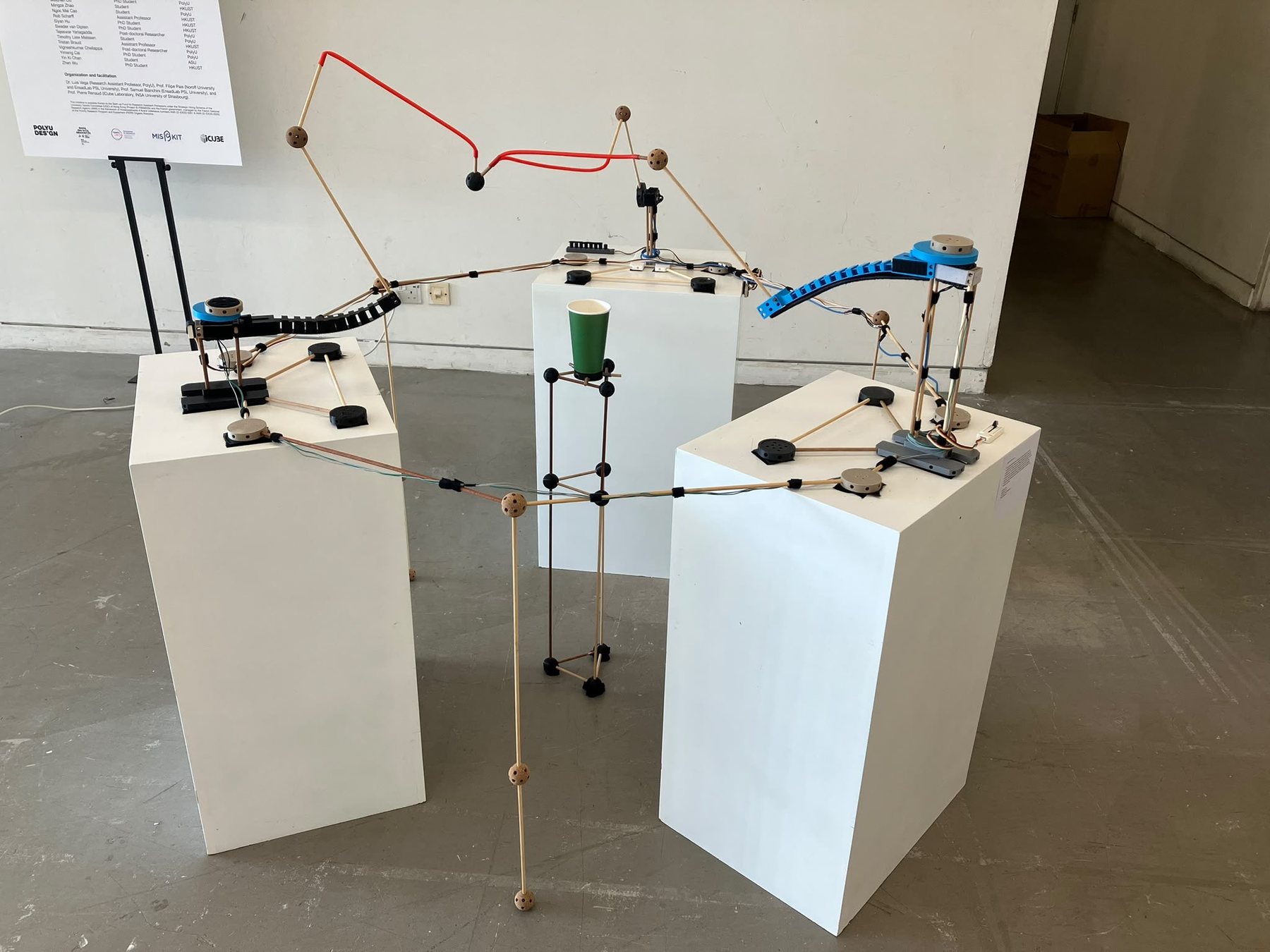
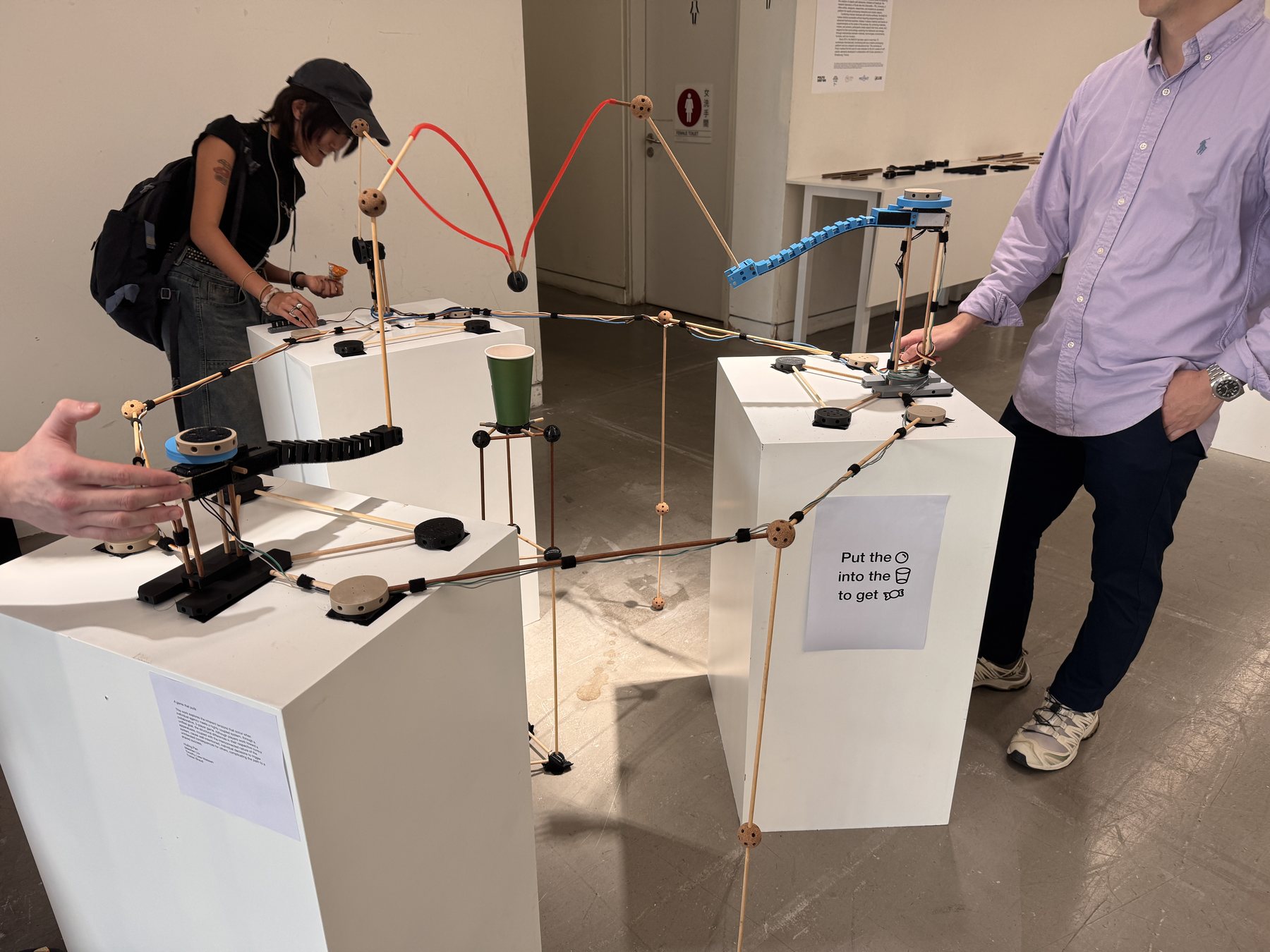
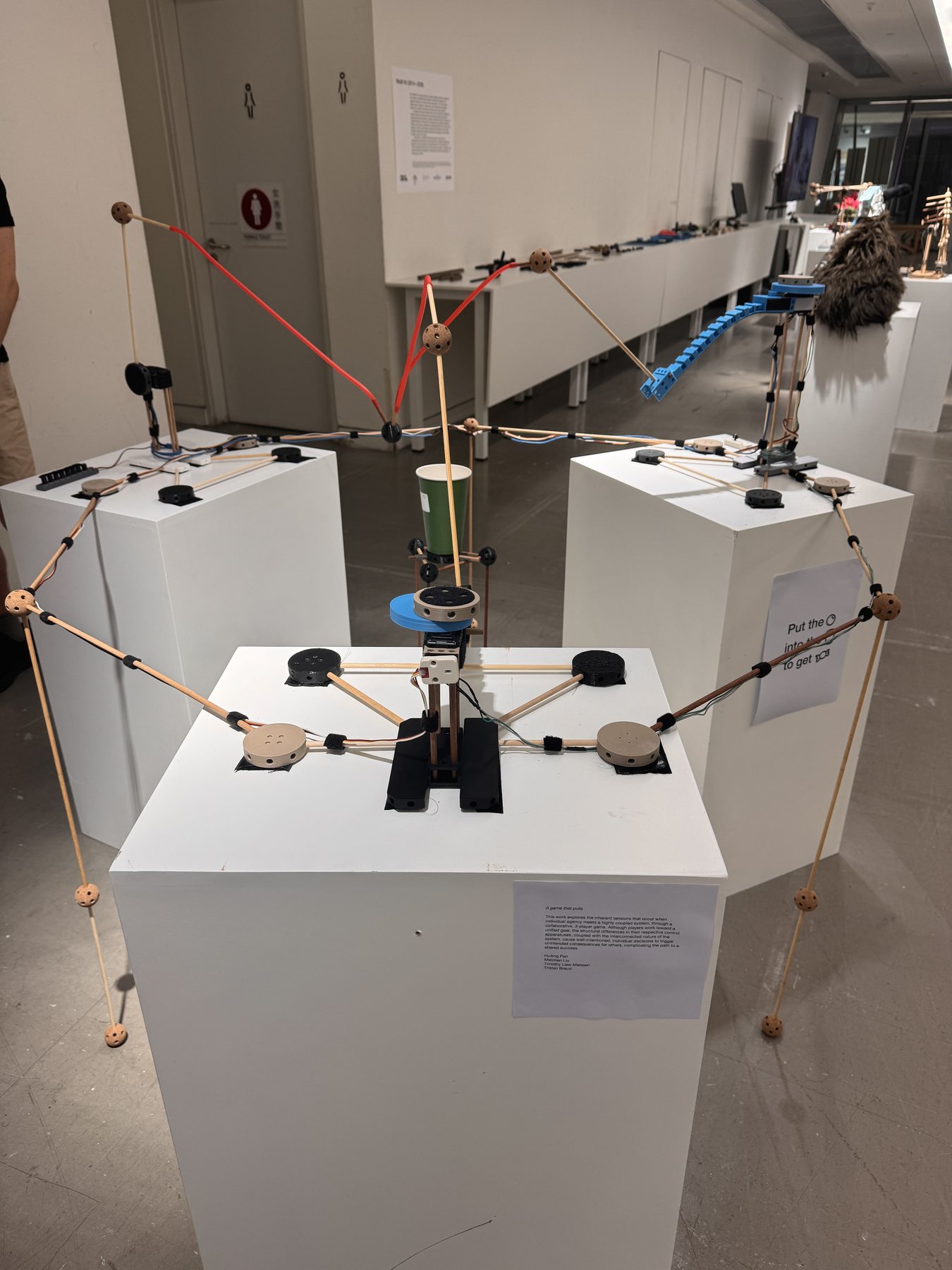
Three people, one ball: it reaches the cup only when everyone keeps responding to one another.
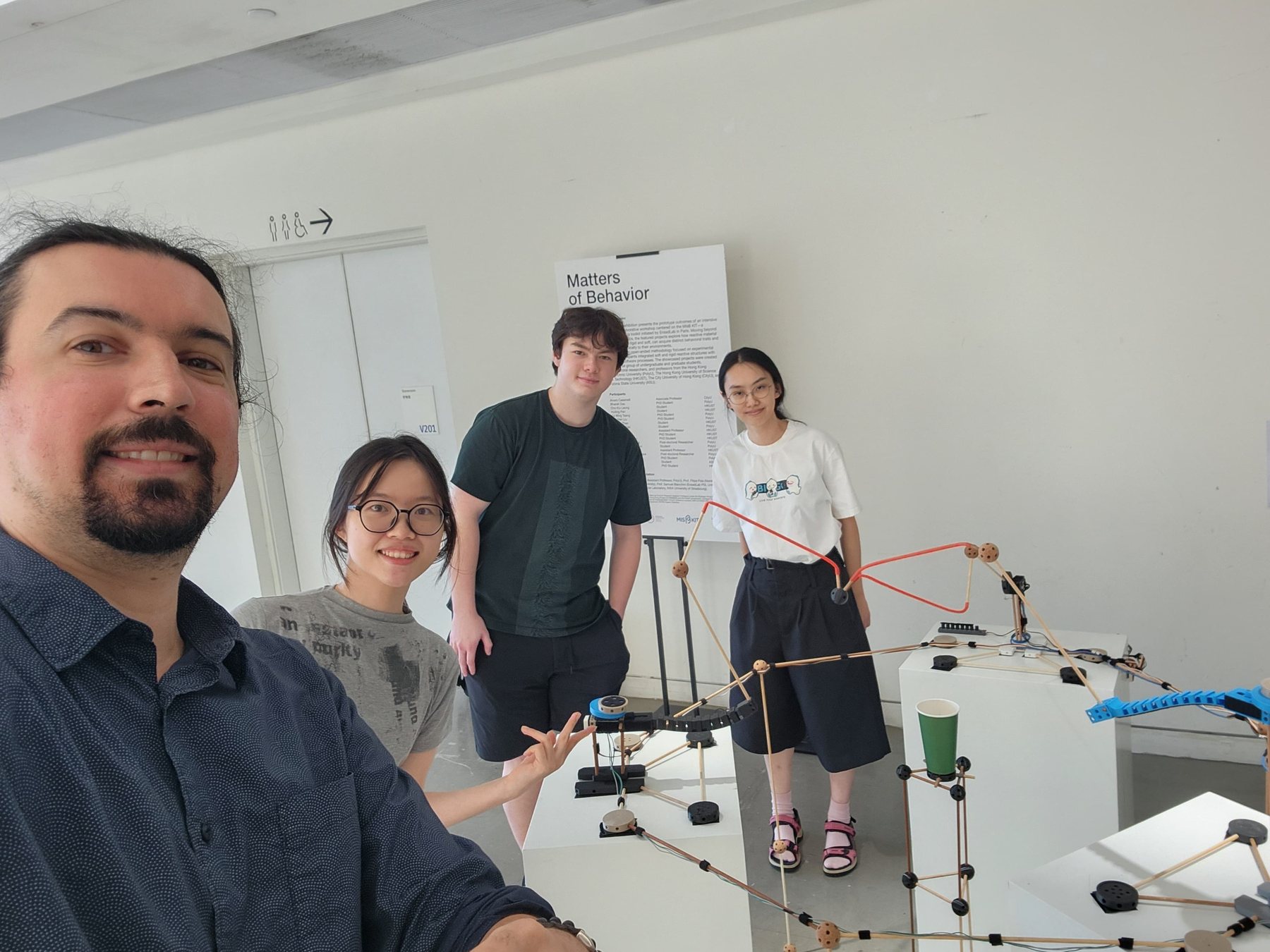
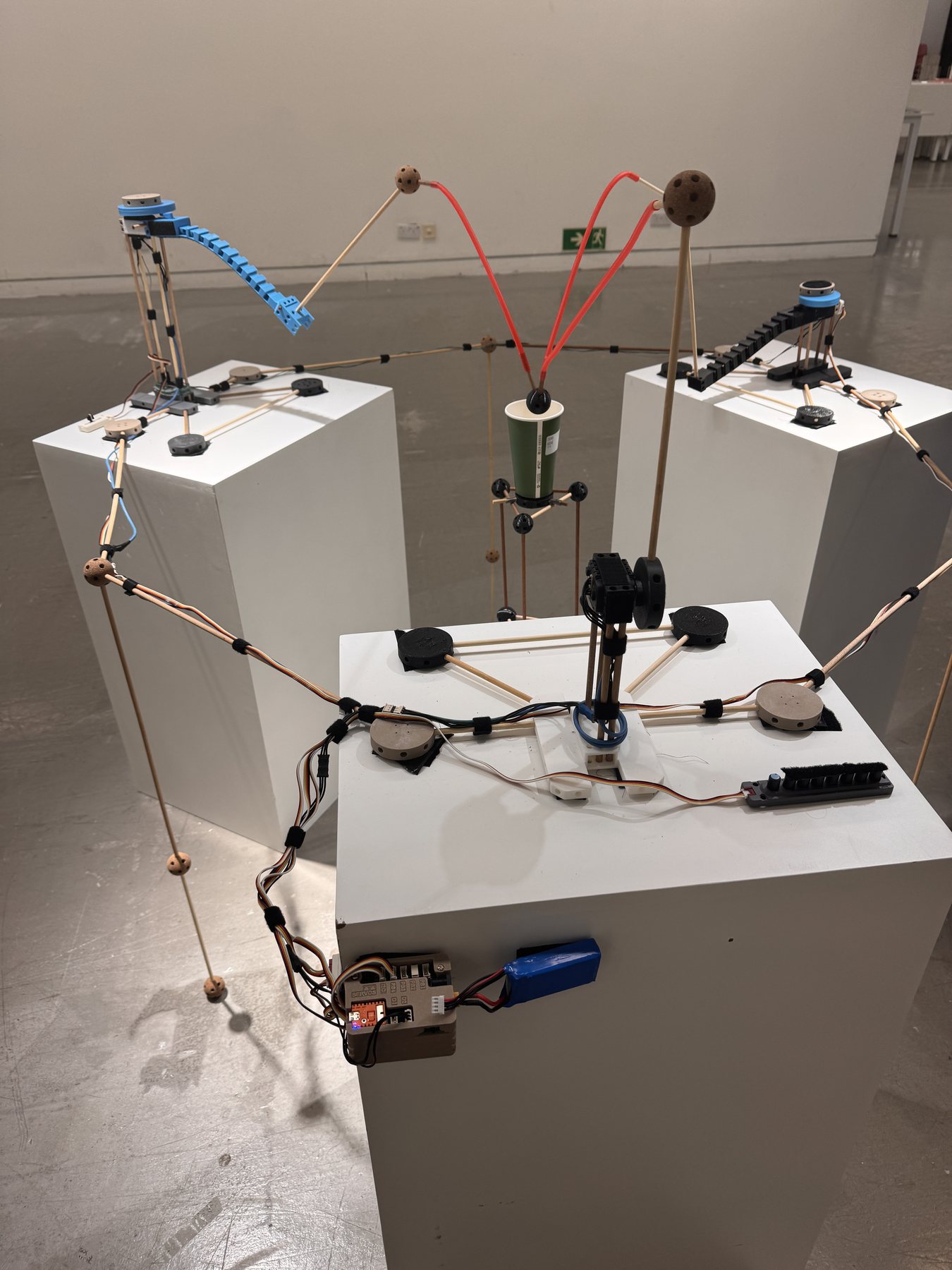
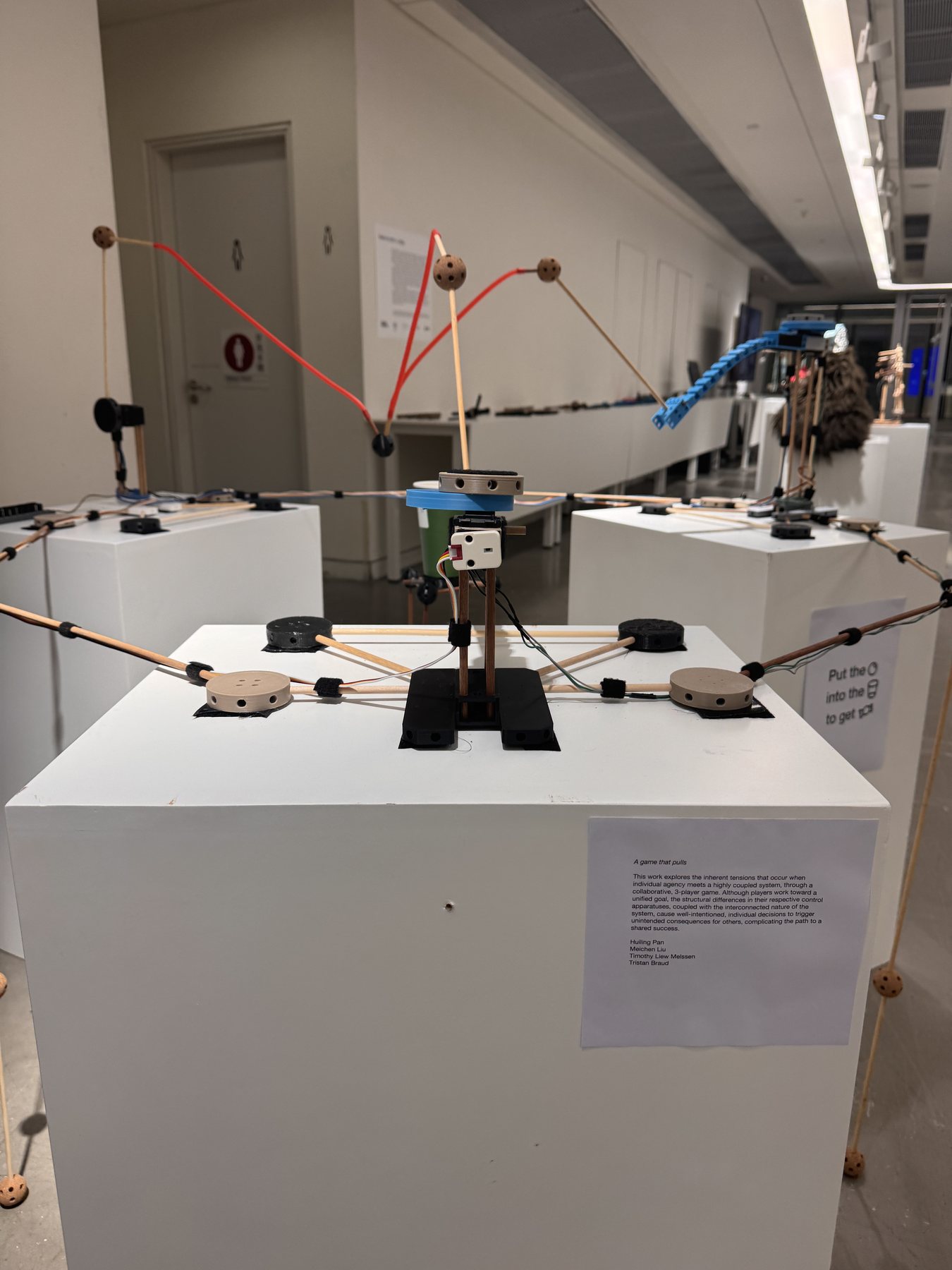
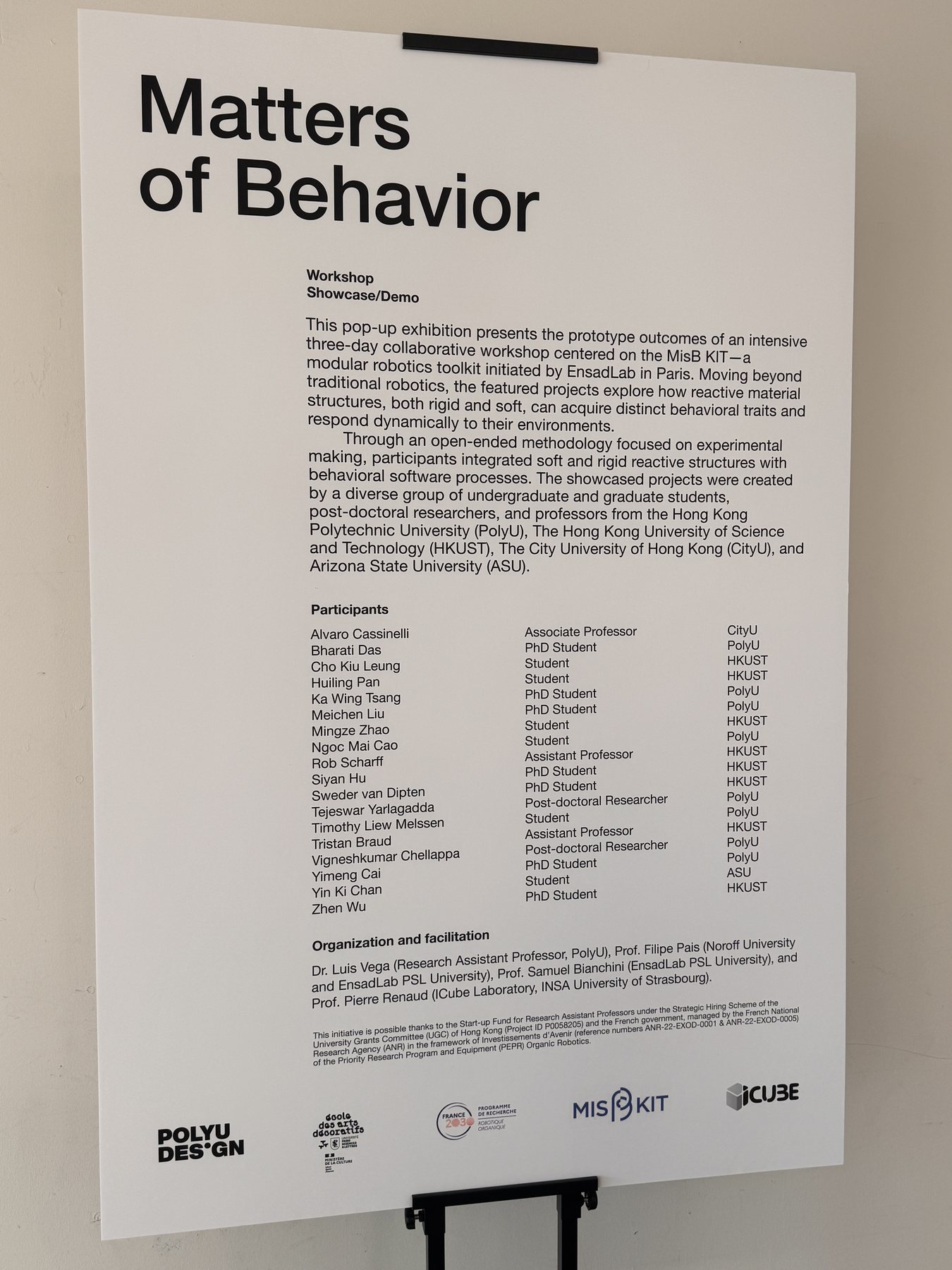
Created by Huiling Pan, Meichen Liu, Timothy Liew Mielssen, and Tristan Braud during the Matters of Behavior workshop at PolyU, A game that pulls is a collaborative installation built with the MisB KIT and the materials available to us.
Workshop Matters of Behavior — Designing animated objects through hands-on experimentation
Created with
- Huiling Pan HKUST
- Meichen Liu PolyU
- Timothy Liew Mielssen HKUST
- Tristan Braud PolyU
Workshop facilitation
- Dr Luis Vega PolyU Design
- Prof. Filipe Pais EnsadLab / Noroff
- Prof. Samuel Bianchini EnsadLab
- Prof. Pierre Renaud ICube / INSA Strasbourg
Partner institutions
- PolyU School of Design Hong Kong
- EnsadLab — École des Arts Décoratifs · PSL Paris
- ICube Laboratory Strasbourg
- HKUST Hong Kong
01
How the game works
Three people, one ball, and a shared goal: getting it into the cup. No one can do it alone. The game unfolds through timing, attention, and the adjustments players make in response to one another.
02
The answer appeared through making
On the first day, I tried to feel the existing materials before deciding what they should become. We played with them in a very direct way. At first we kept asking what we ought to make, but thinking alone did not move us forward. Once our hands began testing, connecting, failing, and trying again, the form gradually disclosed itself.
03
Meaning came after the form
Even the facilitators told us they had not seen paper and their robotic toolkit used in this way before. Only after the structure was working did we begin to ask what it might express. That conversation became another form of play. The fun of operating it—pulling, waiting, reacting, and sometimes disrupting one another—made cooperation, control, accident, and shared consequence tangible.
04
Completed by its players
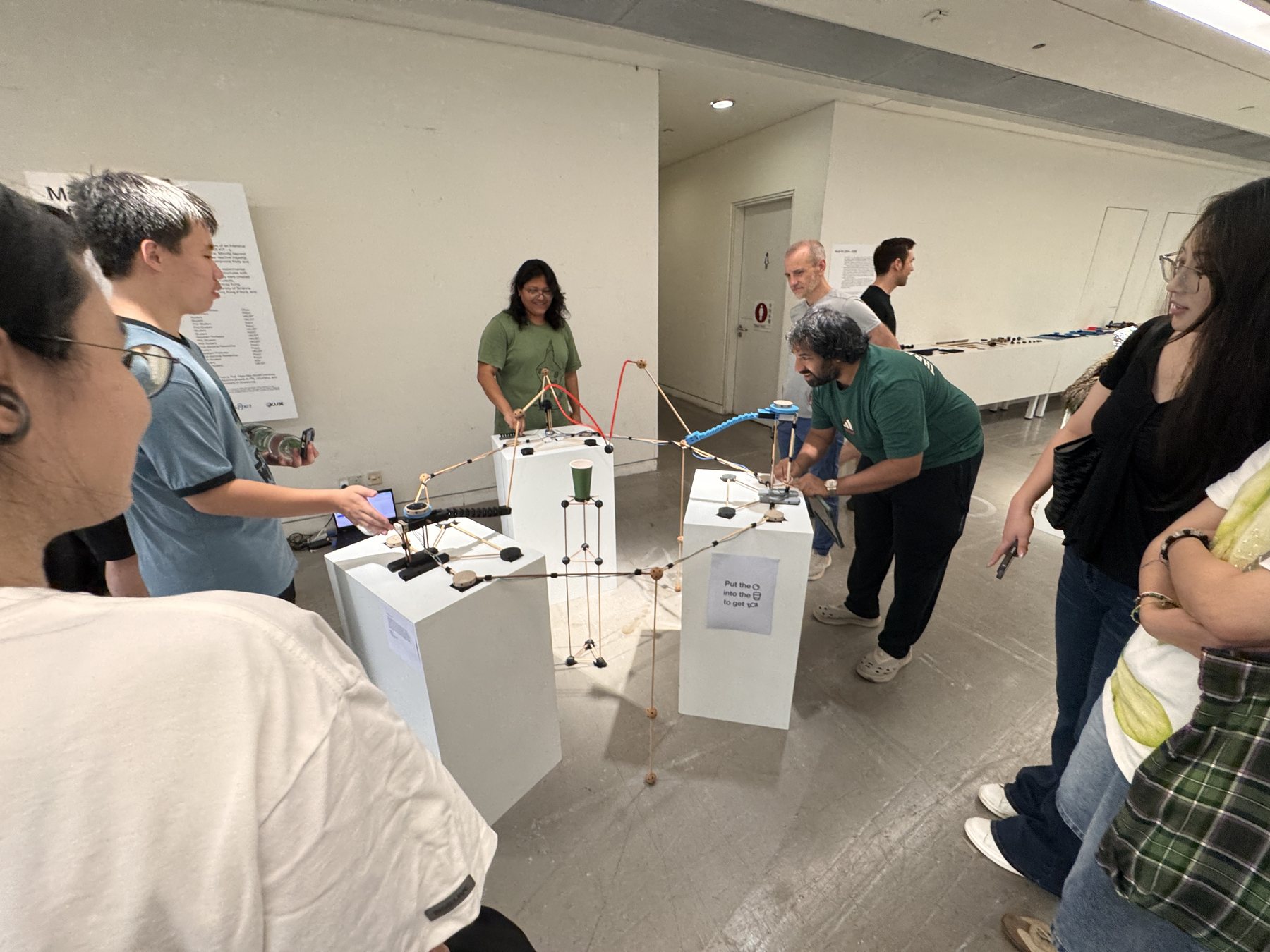
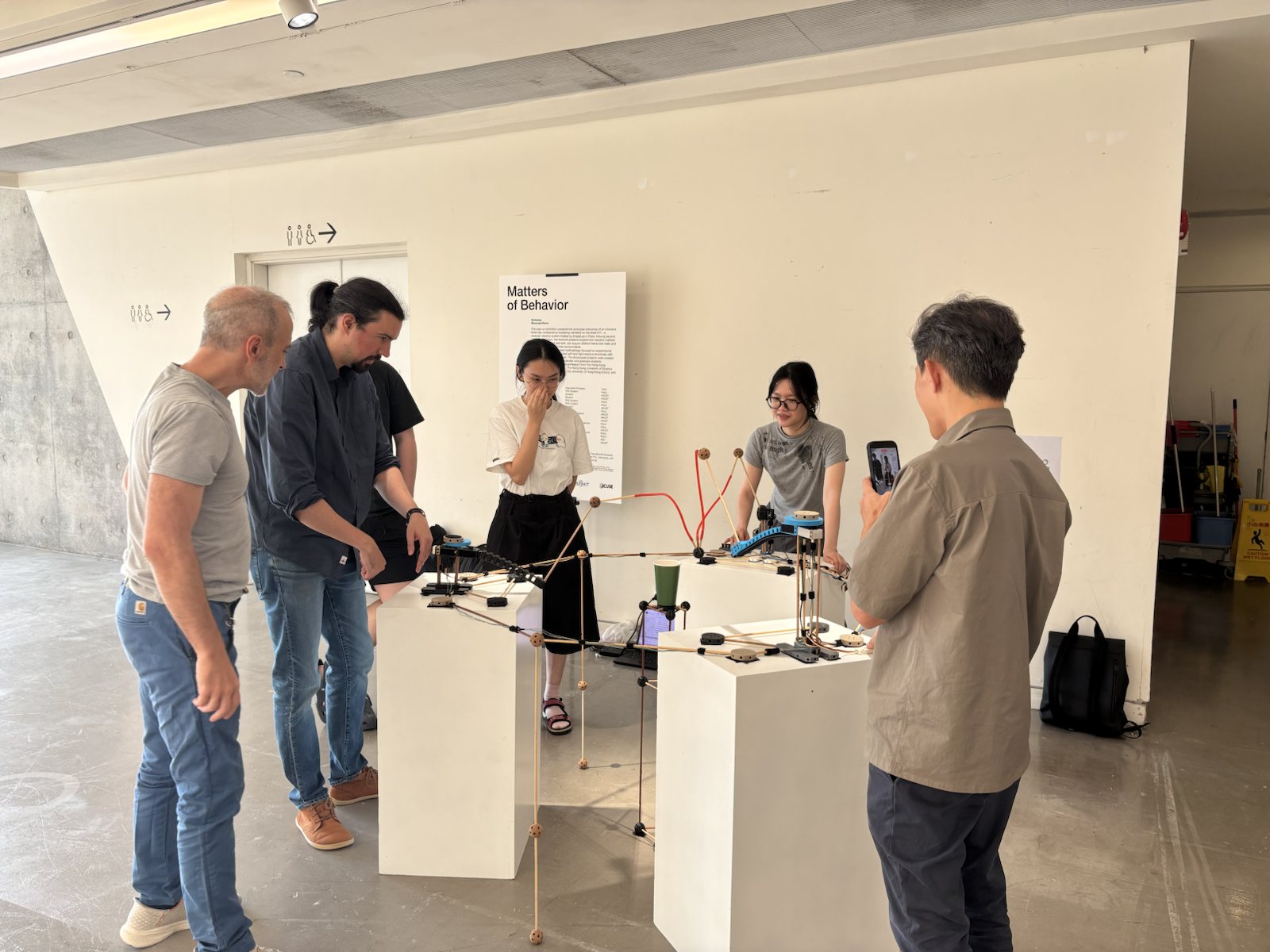
During the public showcase, many people stepped in to try the game. They negotiated who should act next, watched the ball almost fall, recovered together, and laughed. The installation was no longer only the object we had built: it became the temporary relationships formed around it.
REFLECTION
Making without a destination
Before this workshop, I had rarely allowed myself to make something so apparently aimless. Those days showed me that not beginning with a destination does not mean nothing meaningful will happen. The positive effect that emerged—on our team and on the people who played—was unexpectedly reassuring. It changed how I understand art and life: meaning does not always need to precede action. Sometimes it grows from sustained attention to materials, other people, and what is happening in the moment. In this installation I found reflections that felt both personal and social.